The Grammar
of Cute
How Arabic encodes affection, nicknames, and smallness into the shape of a word.
Most languages have ways to make words feel smaller or more affectionate — English adds "-ling" or "-ette", Spanish adds "-ito". Arabic does this too, but with characteristic precision: there is a specific grammatical pattern for it, and it works on almost any noun.
It's called التصغير (at-tasgheer) — the diminutive. It doesn't just shrink a word. It makes it warmer.
Arabic diminutives follow a fixed vowel pattern applied to the root consonants. Take any three-consonant root, reshape it into فُعَيْل (fu'ayl), and you have a diminutive.
The signature feature is the ي (yaa) inserted after the second root letter, with a short a-vowel before it. That -ay- combination gives Arabic diminutives their soft, bright sound.
Arabic names use the diminutive pattern just as freely. The result isn't a childish nickname — it's a term of closeness, warmth, and affection between people who know each other well.
Some diminutive names became so common they're now given as first names in their own right:
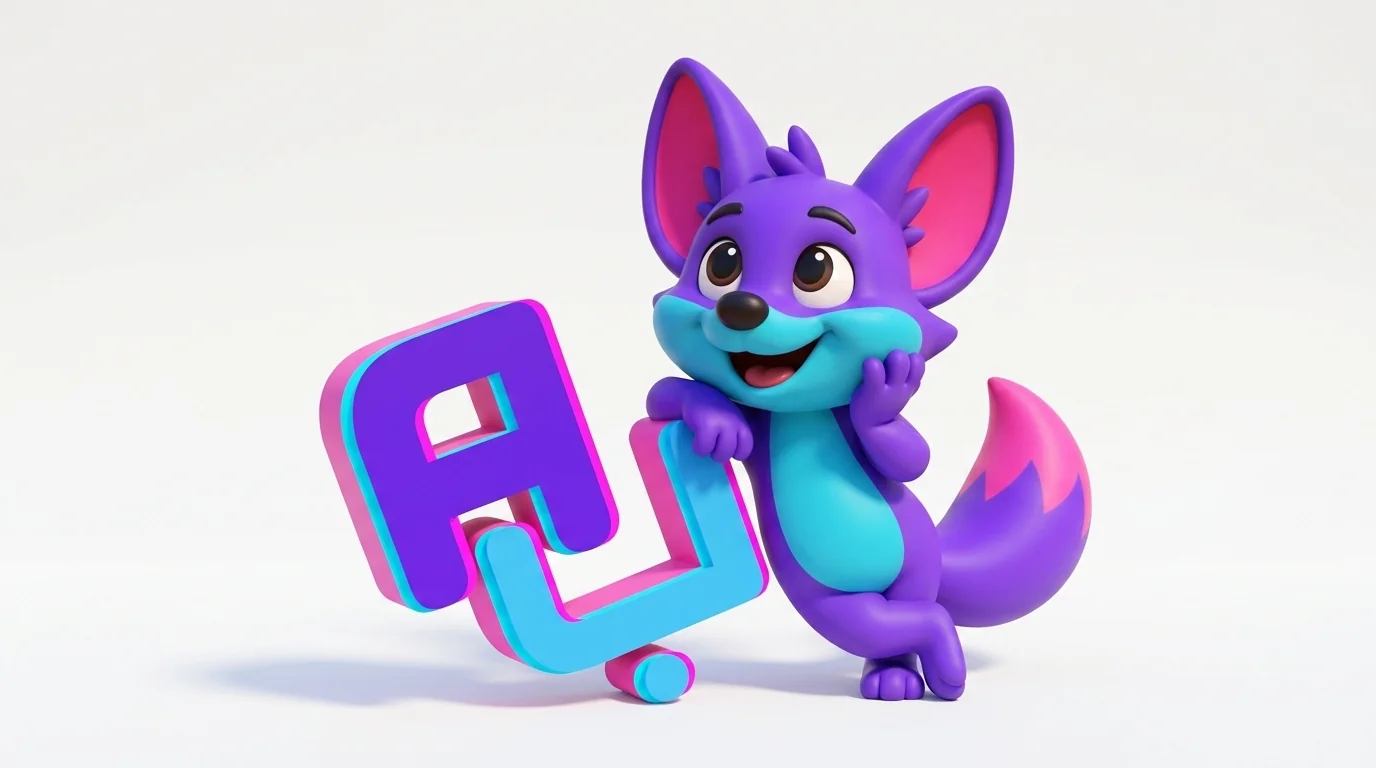
Our mascot's name — عُرَيْب (Urayb) — follows exactly this pattern. His root is عَرَب (Arab, Arabic). Slot it into the diminutive form and you get عُرَيْب: little Arabic one. The smallest, most endearing version of the language itself.
For a character whose whole purpose is to make Arabic feel approachable and warm, that name is doing a lot of work. Every time you say his name, you're speaking a diminutive without knowing it.